What is fuel modification?
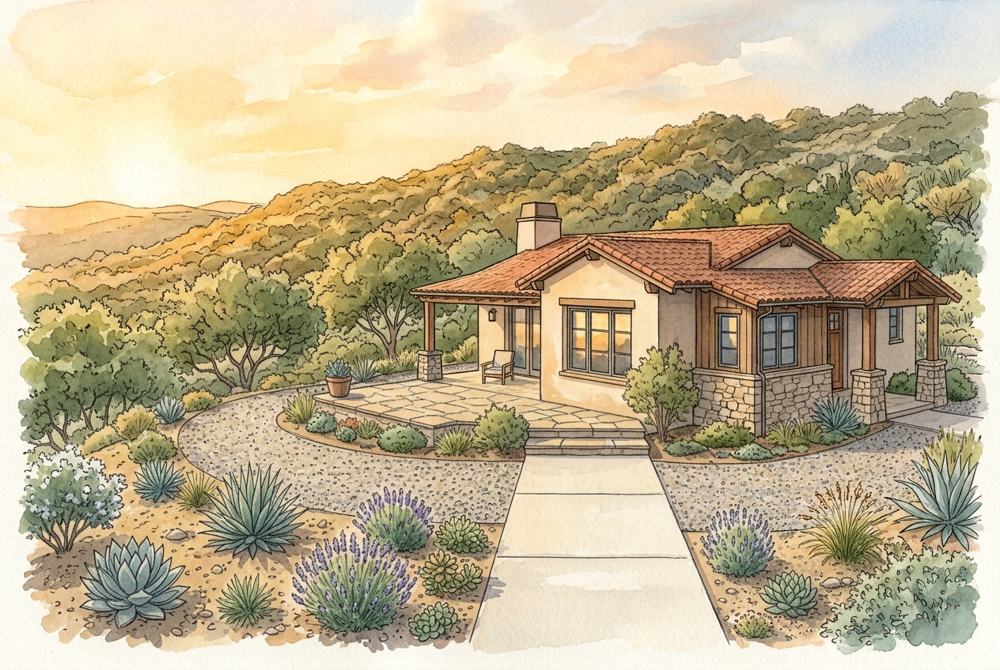
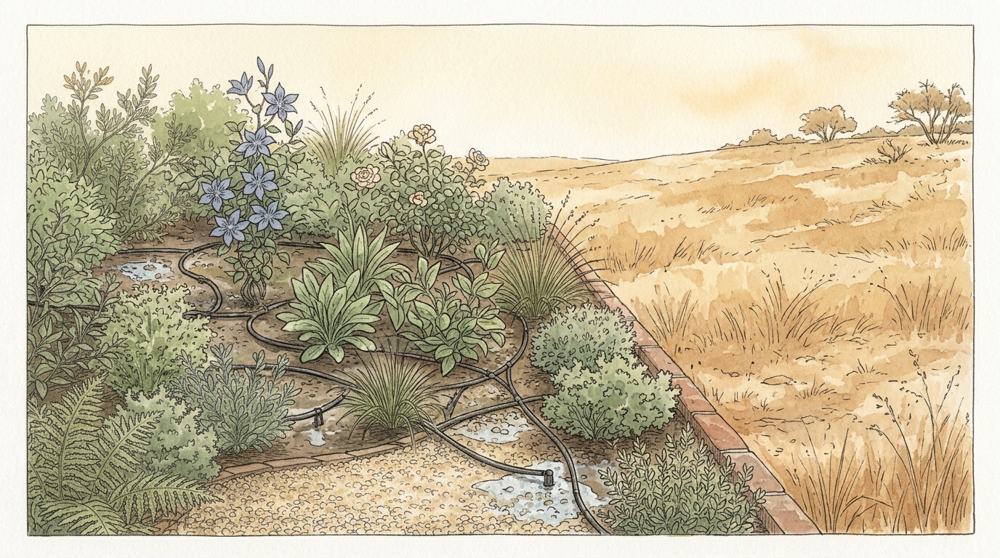
Fuel modification shapes the landscape on purpose: what grows, how much, how close to the house, and how it is watered and kept. It cannot make a home fireproof, but it lowers fire intensity, gives firefighters room to work and leaves embers little to ignite.
State defensible space law sets the baseline and many cities and counties add their own plan review. Your local fire agency always has the last word. Find your agency.
Embers, flames and heat
Embers
Burning bark, leaves and twigs travel a mile or more ahead of a fire and land in gutters, vents and mulch beside the wall.Direct flame
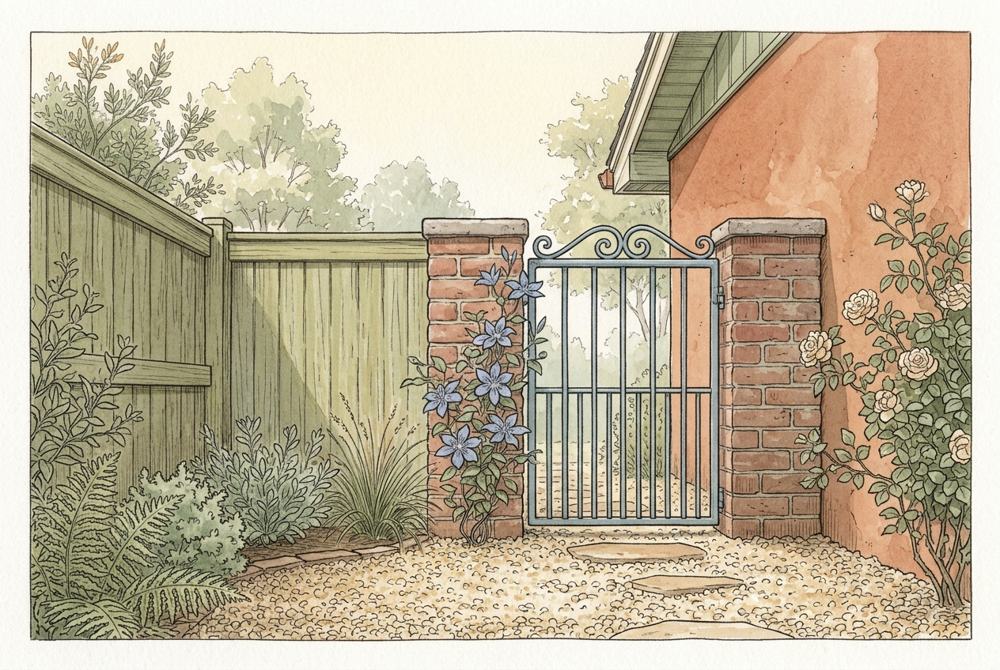
Shrubs, woodpiles or fences touching the house.Radiant heat
Cracks glass and ignites siding without contact. Distance is the main defense.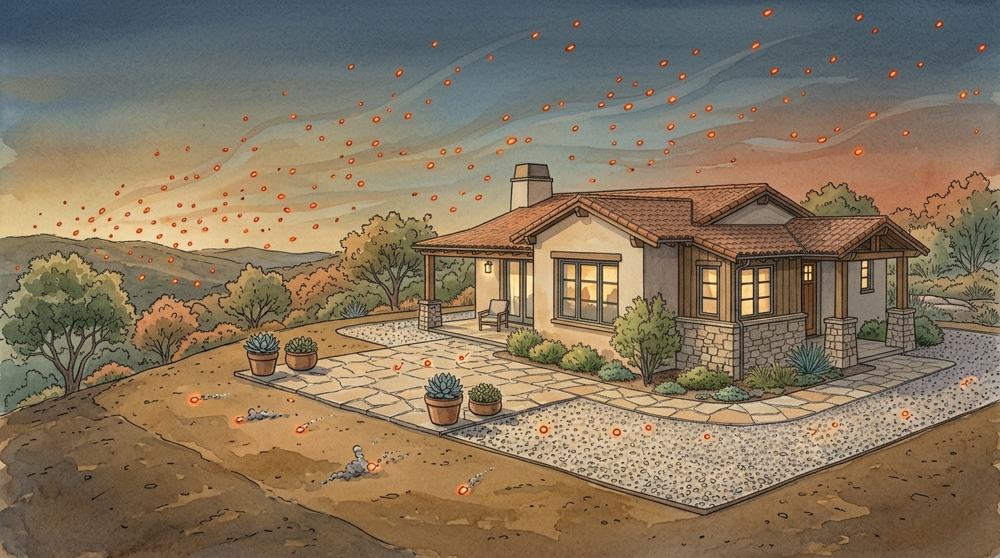
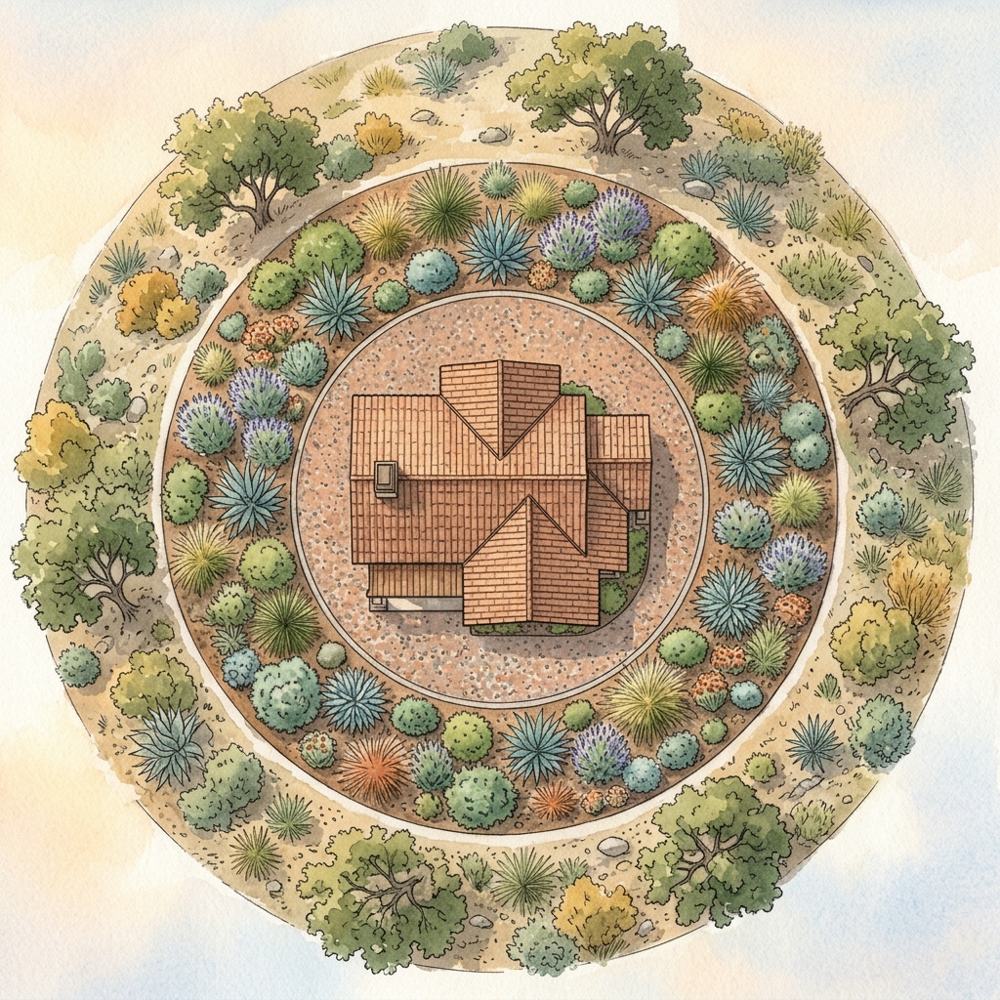
Three rings, one idea
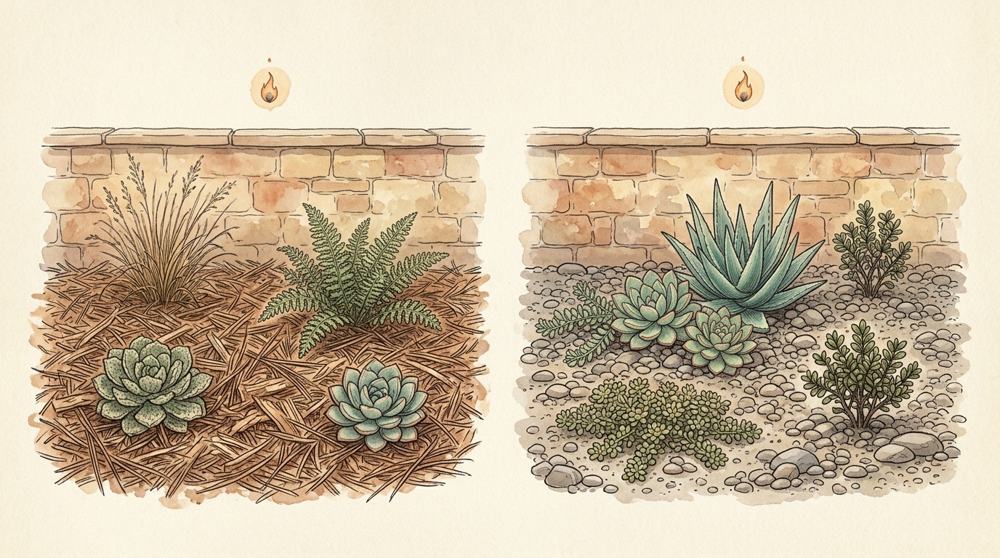
- Zone 0 (0–5 ft): hard, ember-resistant, nothing combustible
- Zone 1 (5–30 ft): irrigated low plants in islands, limbed trees
- Zone 2 (30–100 ft): thinned natives and spacing
- Zone 3 (100–200 ft): outer buffer, some agencies only
Start with what you need
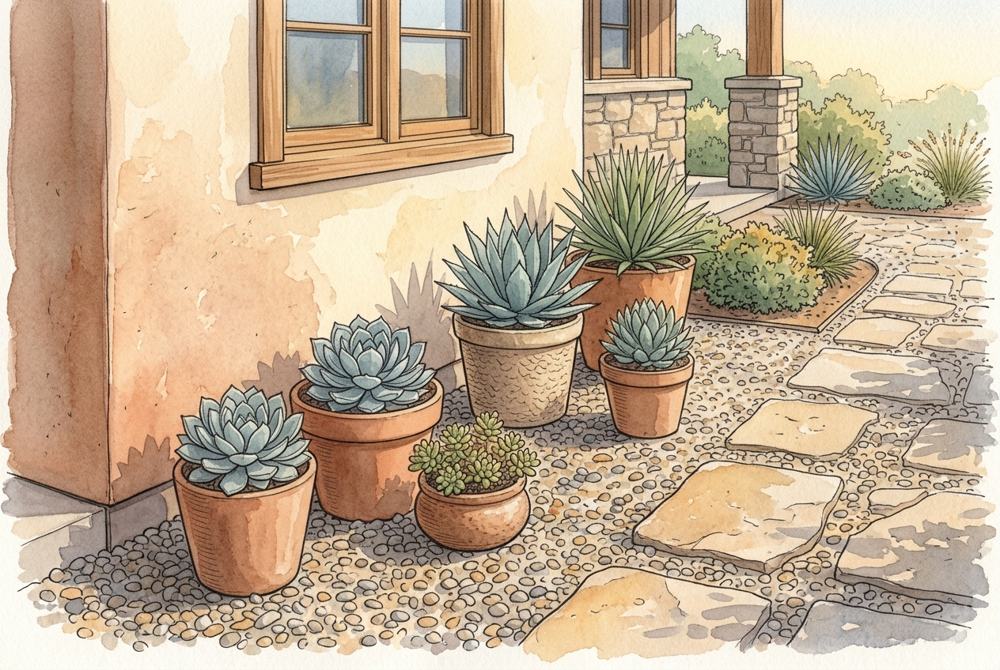
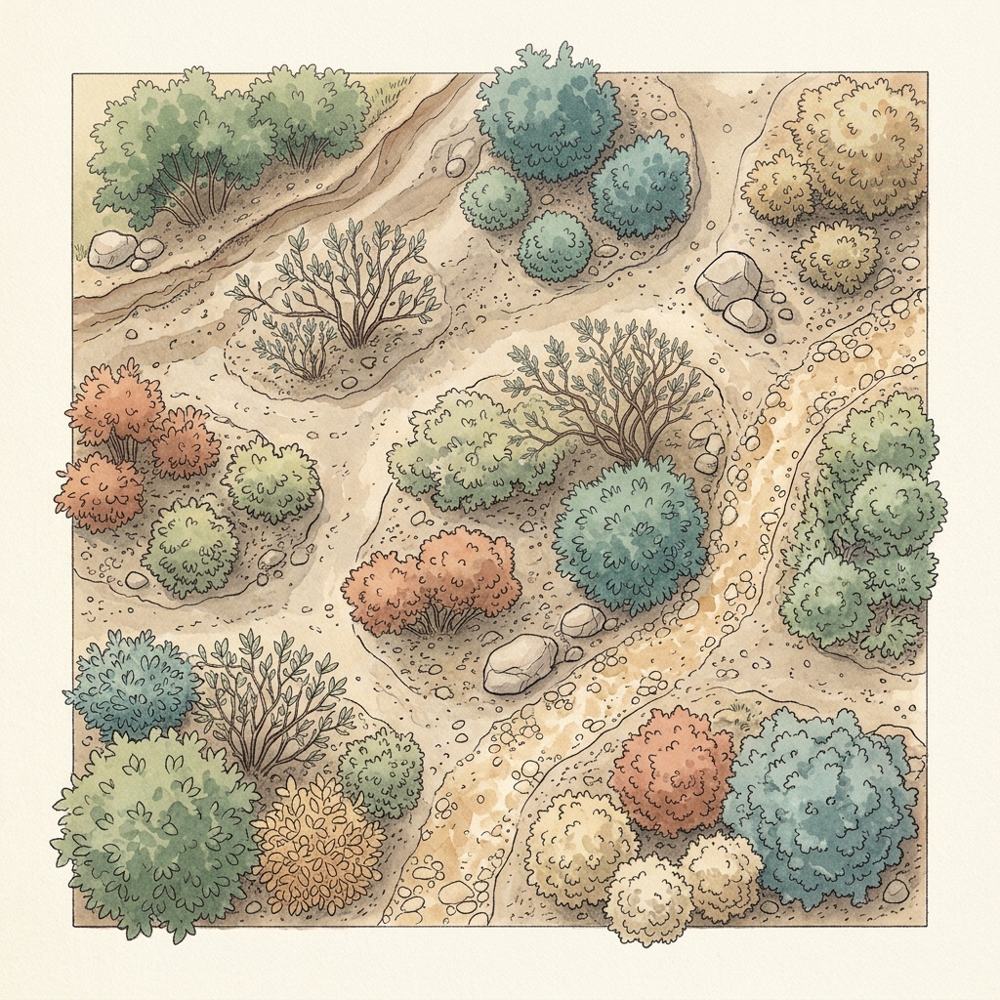
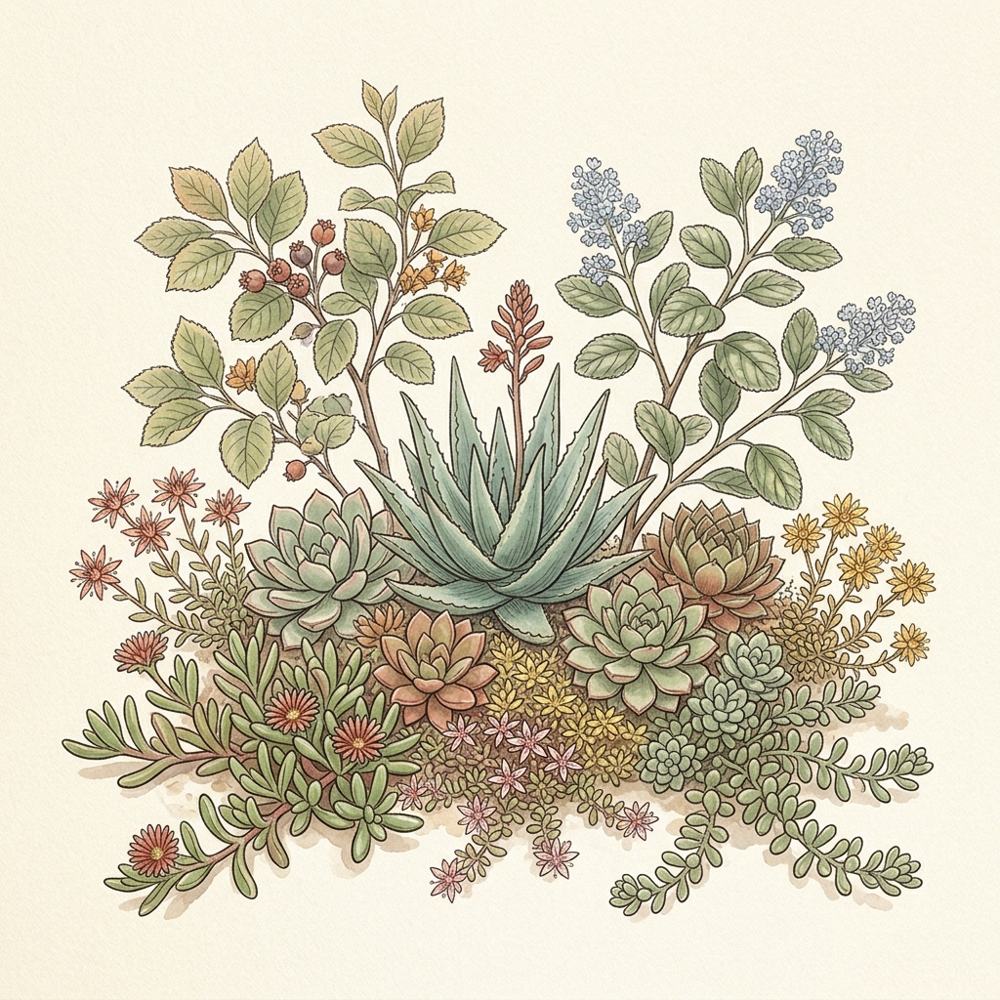
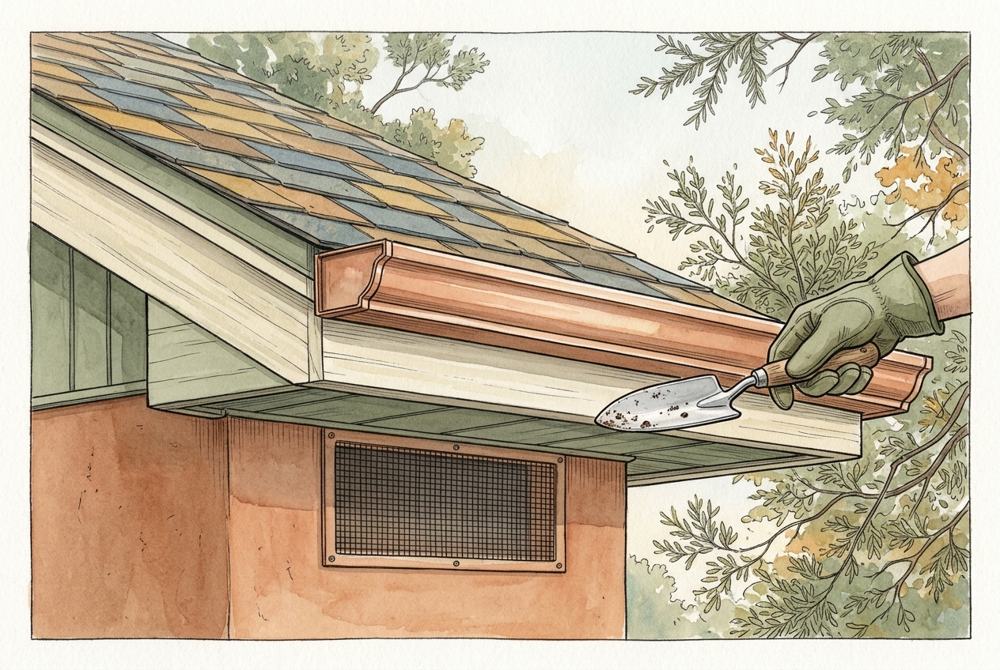
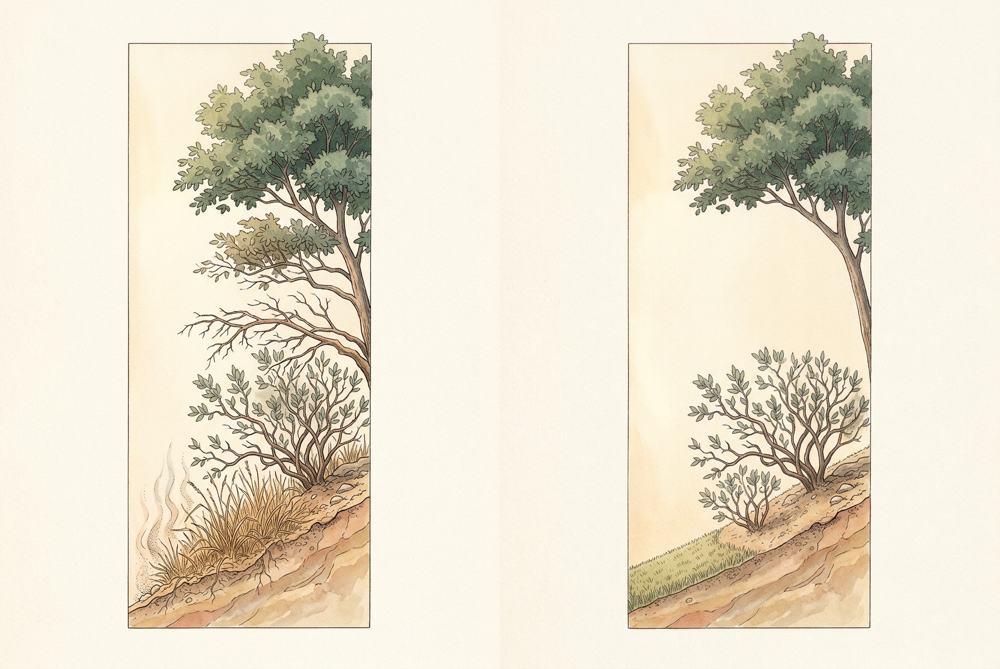
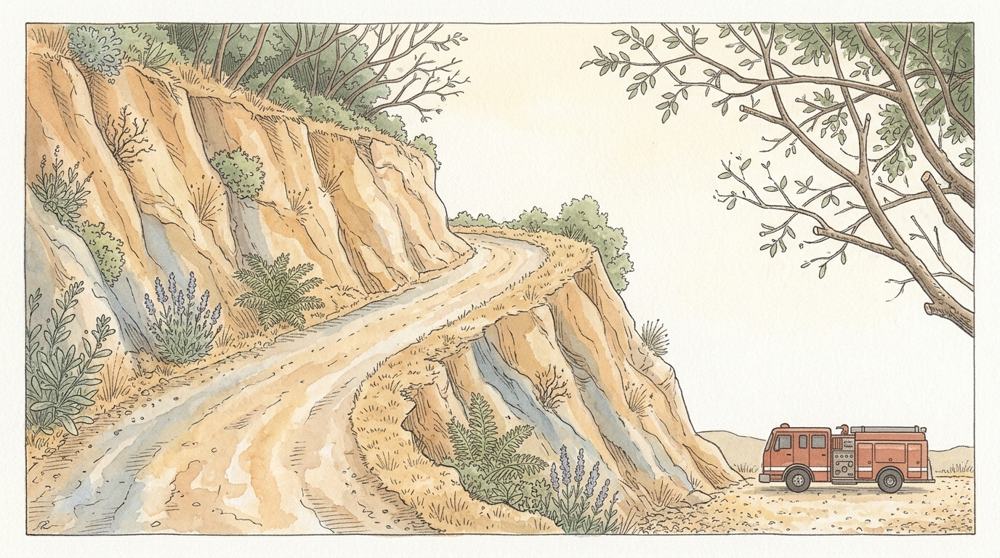
Mulch, fences, slopes and access
Fire-safe still needs a water budget.
Browse species, validate your hydrozones and get permit-ready compliance documents at MWELO.com.
Validate my design at MWELO.comFuel modification questions
What is Zone 0?
The ember-resistant zone, 0 to 5 feet around a structure, with nothing combustible.
How far apart should shrubs be?
Commonly 2×, 4× or 6× shrub height depending on slope; your agency may require more.
Which plants are banned?
Typically juniper, Italian cypress, eucalyptus, pampas grass, broom, chamise, bamboo and woody vines.
Is a water-wise plant also fire-safe?
Not automatically. Check the fire list, then Cal-IPC, then WUCOLS.
Does fuel modification mean bare soil?
No. The goal is managed, irrigated, spaced vegetation.